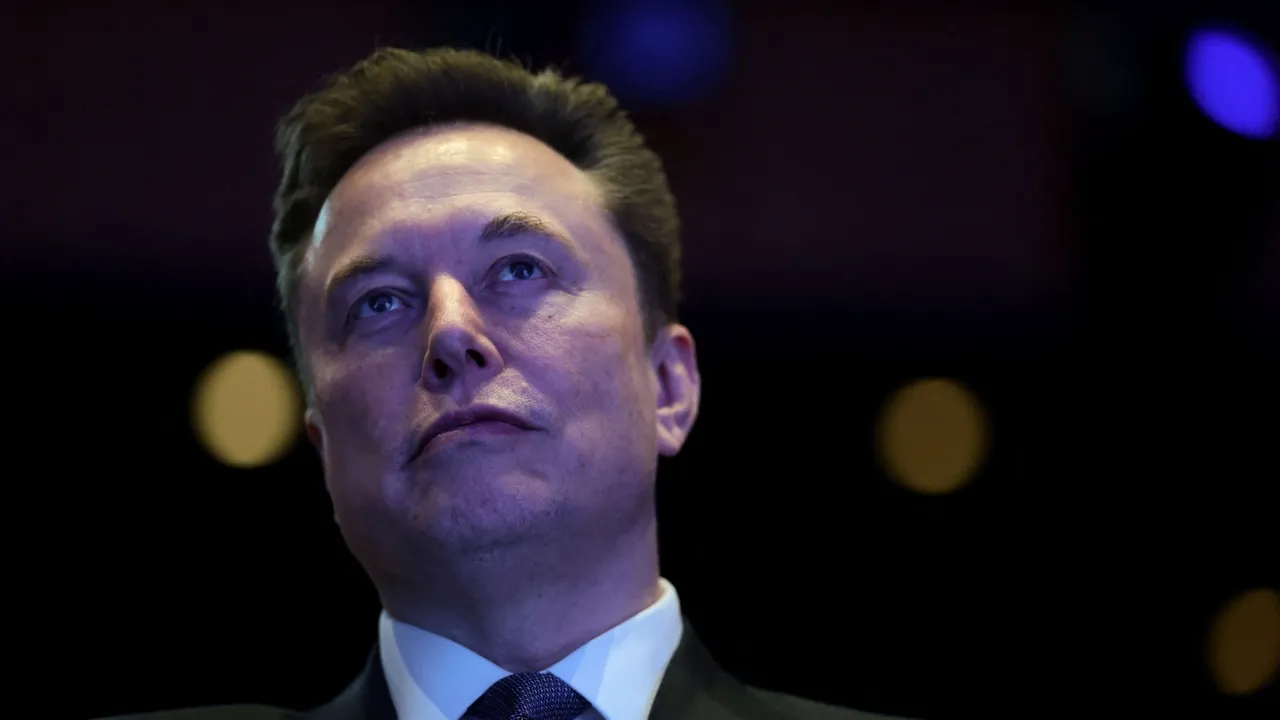
Elon Musk's connection to Africa goes beyond the fact that he was born in Pretoria, South Africa. Through SpaceX and its Starlink satellite internet business, Musk's companies have become increasingly visible across the continent.
Starlink's expansion has been particularly significant. By June 2026, the service was operating in 26 African countries, bringing satellite broadband to markets where conventional internet infrastructure can be difficult or expensive to extend.
Here are some of the biggest things Musk and his companies have done in Africa by 2026.
1. Starlink launched in Nigeria
Nigeria became the first African country to receive Starlink's commercial service in 2023.
The launch gave households, businesses and organisations another way to access high-speed internet without relying entirely on terrestrial fibre or mobile networks.
Nigeria was an important first market for Starlink because of its enormous population and the difficulty of providing reliable broadband across such a large country.
The company's arrival also changed competition in Nigeria's internet market. By 2026, Starlink had become one of the continent's most significant satellite internet providers, while Nigerian regulators continued opening the market to other satellite competitors.
2. Starlink expanded into Rwanda
Rwanda became another early African market for Musk's satellite internet company.
SpaceX received approval to operate Starlink in Rwanda in 2023, with the service positioned as a way of improving connectivity, particularly in areas where conventional infrastructure remained limited.
Rwanda also explored Starlink's use in education. A government-backed pilot planned to use the service in hundreds of schools, giving students and teachers access to online educational resources.
That made Rwanda one of the early examples of Starlink being considered not simply as a consumer internet product but also as part of a country's digital education infrastructure.
3. Starlink spread across more than two dozen African countries
The biggest change has been the scale of Starlink's African expansion.
By June 2026, Starlink was live in 26 African countries, according to a review based on Starlink's availability information. Countries with active service included Kenya, Nigeria, Rwanda, Ghana, Malawi, Mozambique, Zambia, Zimbabwe, Senegal, Sierra Leone, South Sudan and the Democratic Republic of Congo.
That expansion has given communities in countries with limited fixed broadband infrastructure another option for getting online.
The growth also means Musk's SpaceX has established one of the largest satellite internet footprints ever built across Africa.
4. Starlink reached remote schools in Kenya
Kenya has become one of the clearest examples of Starlink being used in African education.
In 2026, Starlink was providing connectivity to 30 remote Kenyan schools. The initiative involved Grow X Education and Kenya's Centre for Mathematics, Science and Technology Education in Africa (CEMASTEA).
The reported results were notable. Teacher use of digital tools increased from 57% to 82%, while the proportion of students completing digital tasks rose from 18% to 36% after the connectivity was introduced.
Musk himself highlighted the Kenyan schools initiative in 2026, drawing attention to Starlink's role in connecting schools in remote parts of the country.
5. Starlink helped put satellite internet on the map in rural Africa
Traditional broadband networks require physical infrastructure such as fibre cables, towers and other network equipment. That can make connectivity particularly challenging in sparsely populated or geographically difficult areas.
Starlink approaches the problem differently by using a constellation of low-Earth-orbit satellites.
Its African expansion has therefore opened another route for communities that are difficult to reach through conventional broadband infrastructure.
By 2026, Starlink had become available in countries including Malawi, Mozambique, Sierra Leone, Zambia, Zimbabwe and South Sudan, alongside its larger markets such as Kenya and Nigeria.
6. Musk's company proposed free connectivity for 5,000 South African schools
South Africa is a different story.
Although Starlink had not commercially launched there by 2026, the company proposed a major education-focused investment as part of its effort to enter the market.
Starlink said it would provide more than 5,000 rural South African schools with fully funded Starlink equipment and service if the regulatory conditions allowed the company to operate.
The proposal became part of a wider dispute over South Africa's ownership and empowerment requirements for telecommunications companies.
So while the school connectivity has not become a nationwide Starlink programme, the proposal represents one of Musk's largest announced commitments to African education.
7. Starlink built an African satellite connectivity network around major hubs
Starlink's African presence is not limited to selling satellite dishes.
The network also relies on ground infrastructure that connects satellite traffic with the wider internet.
By 2026, Starlink's African network included major ground gateways associated with Lagos, Nairobi and Johannesburg, helping support connectivity across different parts of the continent.
That infrastructure reflects how Starlink's African expansion has developed from simply importing satellite equipment into building a broader communications network serving multiple national markets.
What Musk's Africa footprint looks like in 2026
Musk's biggest direct impact on Africa has so far come through connectivity rather than traditional industrial investment.
Starlink has moved from its first African launch in Nigeria in 2023 to operating across 26 African countries by mid-2026. It has also been used in education projects in countries such as Rwanda and Kenya, while proposals for South Africa have focused heavily on connecting rural schools.
There is also an important distinction between what Musk's companies have already delivered and what they have proposed. Starlink's services are active in many African markets, while the South African school programme remained a proposal tied to the company's licensing process.
For Africa, the significance of Musk's presence is therefore less about one spectacular project and more about the rapid arrival of satellite internet as another part of the continent's telecommunications landscape.