
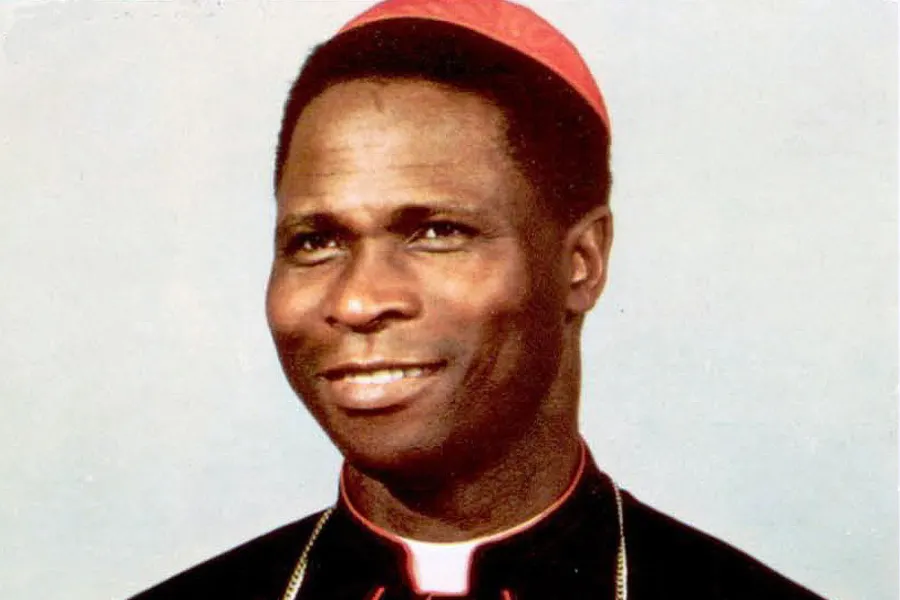
Africa has produced Catholic clergy who have gone on to hold important positions in Rome, working in the institutions of the Holy See and contributing to the wider Catholic Church. Their careers have included senior positions in the Roman Curia, Vatican diplomacy, education and major Church departments.
Some became cardinals after years of service, while others worked as priests and officials in Rome before returning to leadership positions in Africa.
Here are several notable African-born priests whose careers included service in the Vatican.
1. Cardinal Bernardin Gantin from Benin
Bernardin Gantin was one of the earliest African churchmen to reach the highest levels of the Roman Curia.
Born in 1922 in Toffo, Benin, he was ordained a priest in 1951. He went to Rome in 1953 to study missiology at the Pontifical Urban University and later studied theology and canon law at the Pontifical Lateran University.
In 1971, Gantin was called to Rome as adjunct secretary of the Congregation for the Evangelization of Peoples. He became its secretary two years later.
He later served as president of the Pontifical Commission for Justice and Peace and the Pontifical Council Cor Unum. In 1984, Pope John Paul II appointed him Prefect of the Congregation for Bishops, a position he held until 1998. The Vatican describes him as the first African cardinal to head a department of the Roman Curia.
2. Cardinal Francis Arinze from Nigeria
Francis Arinze was born in 1932 in Eziowelle, Nigeria and was ordained a priest in Rome in 1958 at the church of the Pontifical Urban University.
His Vatican career eventually took him to one of the Church's major departments.
In 2002, Pope John Paul II appointed Arinze Prefect of the Congregation for Divine Worship and the Discipline of the Sacraments. He held the position until December 2008.
Arinze also participated in the 2005 conclave that elected Pope Benedict XVI and was appointed a president delegate for the 2009 Special Assembly for Africa of the Synod of Bishops.
His career therefore connected Nigerian Catholicism with some of the most important decision-making bodies of the universal Church.
3. Cardinal Peter Turkson from Ghana
Peter Kodwo Appiah Turkson was born in 1948 in Ghana and was ordained a priest for the Archdiocese of Cape Coast in 1975.
He later returned to Rome for advanced studies at the Pontifical Biblical Institute, where he earned a licentiate in Sacred Scripture.
Turkson eventually became one of the most prominent Ghanaian figures in the Roman Curia.
He served as President of the Pontifical Council for Justice and Peace, beginning in 2009. He subsequently became the first prefect of the Dicastery for Promoting Integral Human Development when the new dicastery was established in 2016.
The Vatican currently lists him as Chancellor of the Pontifical Academy of Sciences and the Pontifical Academy of Social Sciences.
4. Cardinal Robert Sarah from Guinea
Robert Sarah was born in 1945 in Ourous, Guinea, and was ordained a priest in Conakry in 1969.
His academic journey included studies at the Pontifical Gregorian University in Rome, where he obtained a licentiate in theology.
Sarah entered senior Vatican service in 2001 when Pope John Paul II appointed him Secretary of the Congregation for the Evangelization of Peoples.
In 2010, Pope Benedict XVI appointed him President of the Pontifical Council Cor Unum. Four years later, Pope Francis appointed him Prefect of the Congregation for Divine Worship and the Discipline of the Sacraments. He held that position until 2021.
He remains a prominent figure in the Catholic Church and is listed by the Vatican as prefect emeritus of the former congregation.
5. Cardinal Laurent Monsengwo Pasinya from the Democratic Republic of Congo
Laurent Monsengwo Pasinya was born in 1939 in what is now the Democratic Republic of Congo.
He was ordained a priest in 1963 and later travelled to Rome for theological studies at the Pontifical Urbaniana University and the Pontifical Biblical Institute.
His Vatican involvement included major synodal responsibilities. In 2012, Pope Benedict XVI appointed him President Delegate of the XIII Ordinary General Assembly of the Synod of Bishops, held in the Vatican.
Monsengwo was also called to preach the spiritual exercises for the Roman Curia during Lent in 2012. In 2013, Pope Francis appointed him to the Council of Cardinals established to advise him on the government of the universal Church and the reform of the Roman Curia.
6. Cardinal Protase Rugambwa from Tanzania
Protase Rugambwa was born in 1960 in Bunena, Tanzania, and was ordained a priest in 1990.
After earning a doctorate in pastoral theology from the Pontifical Lateran University in Rome, he returned to Rome in 2002 and joined the Congregation for the Evangelization of Peoples as an official.
His Vatican career continued after his appointment as bishop. In 2012, he became adjunct secretary of the Congregation for the Evangelization of Peoples and president of the Pontifical Mission Societies. In 2017, he became secretary of the same congregation.
He later returned to Tanzania and became Metropolitan Archbishop of Tabora.
7. Archbishop Novatus Rugambwa from Tanzania
Another Tanzanian priest with a substantial Vatican career was Novatus Rugambwa, born in Bukoba in 1957 and ordained a priest in 1986.
He entered the diplomatic service of the Holy See in 1991 and served in papal diplomatic missions in several countries, including Panama, the Republic of Congo, Pakistan, New Zealand and Indonesia.
In 2007, Pope Benedict XVI appointed him Undersecretary of the Pontifical Council for the Pastoral Care of Migrants and Itinerant People.
Rugambwa later became an archbishop and served as an apostolic nuncio in several countries. He died in September 2025 after a career spanning four continents in the diplomatic service of the Holy See.
African Clergy and the Vatican
The careers of these African priests show how the relationship between Africa and the Vatican has developed over several generations.
African-born priests have held responsibilities extending well beyond their home dioceses.
Their stories also stretch across different periods of Catholic history, from the early decades after African independence to the modern Roman Curia.


