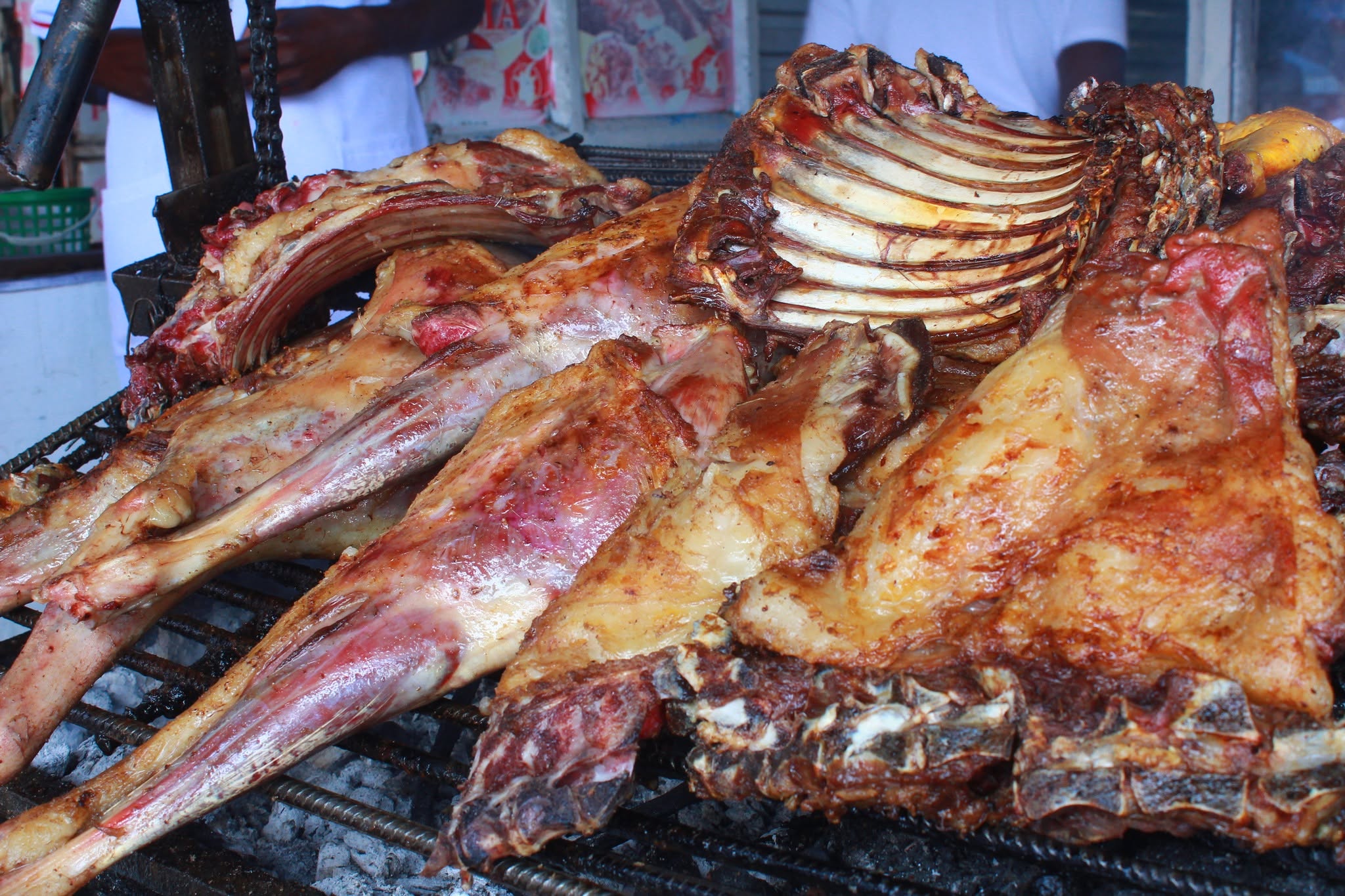
Maize, meat, vegetables, spices and slow-cooked stews appear throughout the country's cooking, but the combinations vary between communities. Cape Malay influences are particularly visible in the Western Cape, while KwaZulu-Natal is famous for dishes shaped by Indian South African food traditions.
These 20 dishes represent some of the country's best-known everyday meals, regional specialties and desserts.
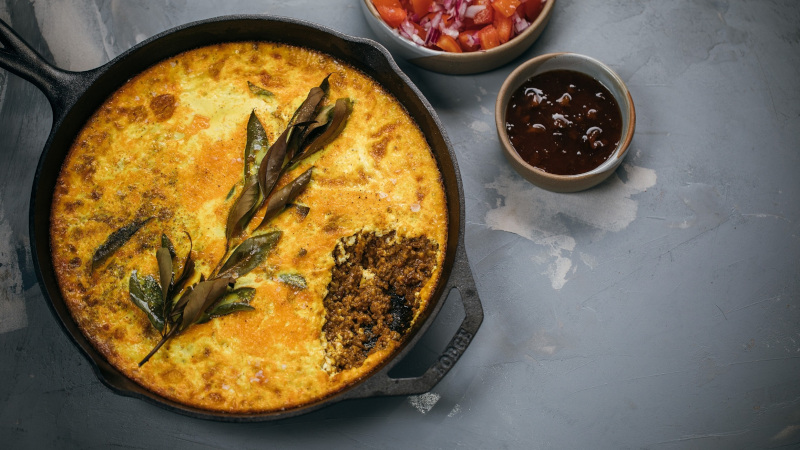
1. Bobotie
Bobotie is a baked dish of spiced minced meat topped with a savoury egg-and-milk mixture. Raisins or other dried fruit sometimes add sweetness.
Closely associated with Cape Malay cooking, it is commonly served with yellow rice, chutney and vegetables. Its combination of curry spices and a soft baked topping make it distinctive.
2. Bunny Chow
Bunny chow is strongly associated with Durban's Indian South African communities. It consists of a hollowed-out loaf or portion of bread filled with curry.
Common fillings include beans, chicken, mutton or other meat. The bread absorbs the sauce, turning the container itself into part of the meal.
3. Pap and Chakalaka
Pap is a maize-meal staple eaten across South Africa. Depending on preparation, it can be firm, crumbly or soft.
Chakalaka is a spicy vegetable relish commonly prepared with onions, tomatoes, peppers, carrots and sometimes beans. Together, they form a familiar accompaniment to grilled meat and stews.
4. Boerewors
Boerewors is a traditional South African sausage typically made from seasoned minced meat and formed into a long coil.
Coriander is one of its characteristic spices. It is closely associated with braais, where the sausage is grilled over coals and often served with pap.
5. Potjiekos
Potjiekos takes its name from the three-legged cast-iron pot used for cooking.
Meat, vegetables and seasonings are slowly cooked over a fire, producing a rich stew. Recipes differ between households, and the cooking process is often part of a social gathering.
6. Vetkoek
Vetkoek is fried bread dough with a crisp exterior and soft interior.
It can be served plain, with sweet fillings or stuffed with savoury minced meat. Versions called amagwinya or magwinya are widely sold as street food.
7. Kota
Kota is a township sandwich made from a quarter loaf of bread filled with combinations of chips, sausage, polony, cheese, egg or other ingredients.
Particularly associated with Gauteng townships, it has become one of South Africa's recognizable fast-food creations.
8. Durban Curry
Durban curry is known for its bold spices and strong connection to Indian South African cooking.
Chicken, mutton, beans and seafood versions are common. Compared with many other curries, some Durban preparations use generous amounts of chilli and distinctive local spice blends.
9. Malva Pudding
Malva pudding is a baked sponge dessert commonly made with apricot jam.
A sweet sauce is poured over the pudding, giving it a moist texture. It is frequently served warm with custard, cream or ice cream.
10. Melktert
Melktert, meaning milk tart in Afrikaans, consists of a pastry crust filled with a milk-based custard.
Cinnamon is commonly sprinkled over the top. The dessert is a familiar feature of bakeries, family gatherings and celebrations.
11. Biltong
Biltong is seasoned, air-dried meat, usually made from beef or game.
Unlike ordinary cooked meat snacks, its distinctive texture comes from drying. Coriander, vinegar, salt and other seasonings contribute to its flavor.
12. Droëwors
Droëwors is a dried sausage commonly made using beef and spices.
It is closely related to the country's boerewors tradition but is prepared for eating as a dried snack rather than grilled fresh sausage.
13. Umngqusho
Umngqusho is a traditional dish made with samp, which is dried crushed maize, and beans.
Associated particularly with Xhosa cooking, it is filling and can be prepared with vegetables, seasonings or meat. It's simple ingredients have made it a longstanding household staple.
14. Morogo
Morogo refers to several kinds of cooked leafy vegetables, including traditional African greens.
The leaves may be boiled or sautéed with onions and tomatoes. Morogo is commonly served with pap and represents an important part of Indigenous food traditions.
15. Mogodu
Mogodu is a traditional tripe dish cooked until tender, often with onions, tomatoes and seasonings.
It is particularly familiar in Sotho-Tswana food traditions, although variations appear elsewhere. It is commonly accompanied by pap or another starch.
16. Tomato Bredie
Tomato bredie is a slow-cooked stew usually combining meat, tomatoes, onions and potatoes.
The dish is strongly associated with Cape cooking. Long cooking allows the tomatoes to develop a thick sauce around the meat and vegetables.
17. Waterblommetjiebredie
Waterblommetjiebredie is a regional Western Cape stew prepared using edible waterblommetjies, the flower buds of an aquatic plant.
Lamb or mutton is commonly used, while sorrel contributes a slightly sour flavour. It is particularly associated with seasonal Cape cooking.
18. Sosaties
Sosaties are skewers of marinated meat, often prepared with curry spices and sometimes dried fruit.
Their sweet-and-savoury flavour reflects Cape Malay culinary influences. They are frequently grilled over coals at outdoor gatherings.
19. Skilpadjies
Skilpadjies are small portions of seasoned liver traditionally wrapped in caul fat and grilled.
They are associated with Afrikaans braai cooking and are often served as a rich savoury snack or accompaniment.
20. Koeksisters
Koeksisters are a well-known South African sweet made from fried dough soaked in syrup.
The familiar plaited Afrikaner-style version is particularly sweet and sticky. Cape Malay koesisters are different, commonly spiced, softer and finished with coconut.
What Makes South African Food Distinctive?
South African cuisine cannot be reduced to one cooking tradition. Maize-based staples connect many communities, while Cape Malay dishes, Indian South African curries, Afrikaans stews and township foods reflect different histories.
Several dishes also exist in neighbouring countries or have international roots. Their place in South African cuisine comes from the ways local communities have prepared, adapted and shared them over generations.