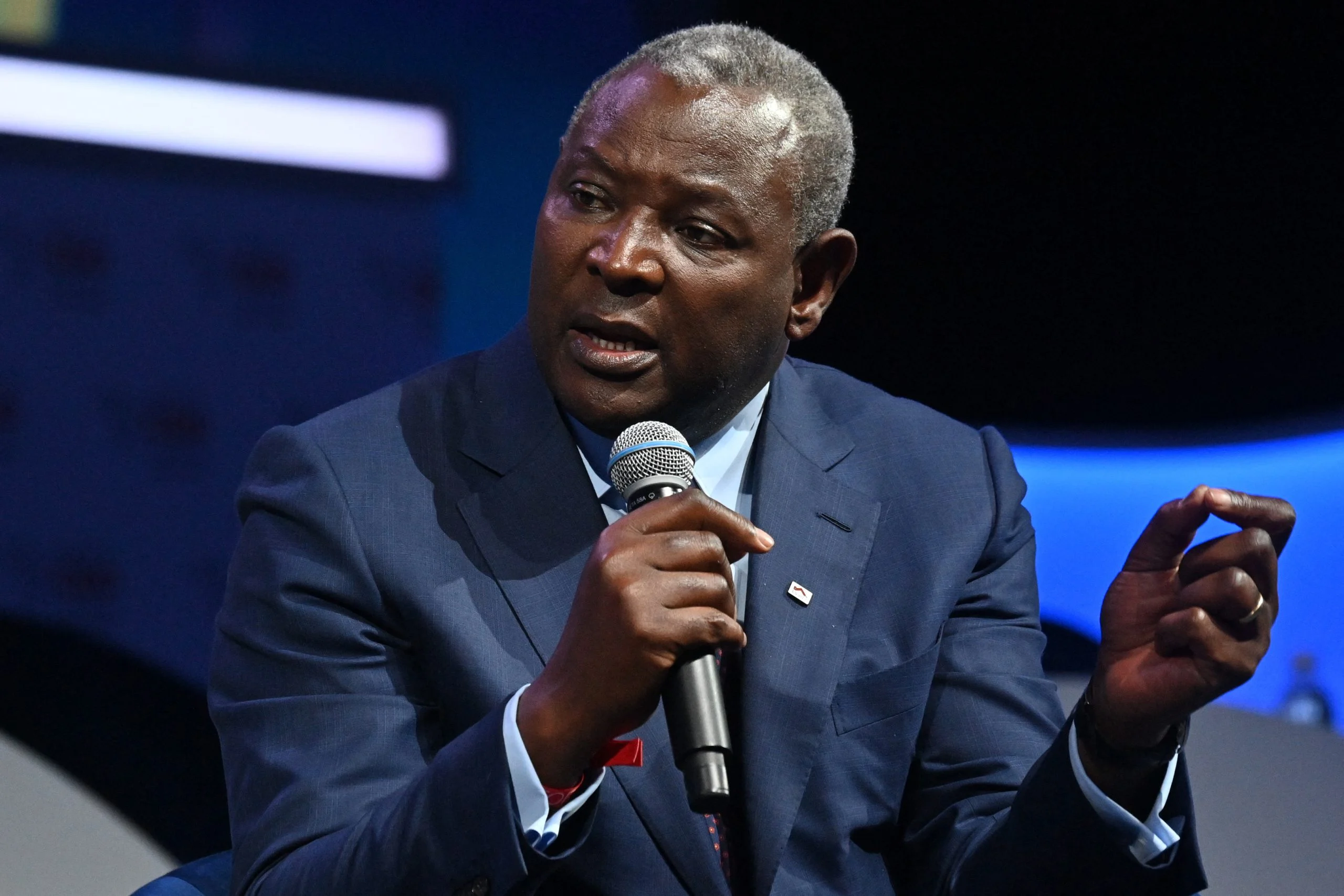
Who Is Dr James Mwangi?
Dr James Mwangi, CBS, is a Kenyan banker, accountant, business executive and philanthropist born in 1962 in Kangema, Murang’a County, Kenya. He is the Group Managing Director and Chief Executive Officer of Equity Group Holdings and executive chairman of Equity Group Foundation. Mwangi is known for leading the transformation of Equity Building Society, a financially troubled institution, into a major regional financial services group. He holds a Bachelor of Commerce degree from the University of Nairobi and is a certified public accountant. In 2012, he became the first business leader from sub-Saharan Africa to win Ernst & Young’s World Entrepreneur of the Year award.
His Upbringing
Mwangi grew up in a family with limited financial resources. His mother, Grace, raised him and his seven siblings after the death of his father. His childhood experiences in rural Kenya exposed him to the difficulties faced by families who had little access to formal banking services. Many people relied on informal savings arrangements because conventional financial institutions were often inaccessible or did not consider small customers commercially attractive.
He studied commerce at the University of Nairobi and qualified as an accountant. Before joining Equity, he gained experience working in the financial sector, including at Ernst & Young and Trade Bank. He then became involved with Equity Building Society, an institution established in 1984 to provide mortgage finance and savings services to ordinary Kenyans.
By the early 1990s, Equity was in serious financial difficulty. Its accumulated losses exceeded its original capital, and its position raised the possibility of regulatory intervention. Mwangi joined its management team and became finance director and change agent, helping restructure the business. He was appointed chief executive in 2004, the same year Equity converted into a fully fledged commercial bank.
The institution’s subsequent growth came from a model focused on serving customers who had traditionally been overlooked by mainstream banking. Equity expanded its branch network, introduced technology-based services and developed products for individuals, small businesses and larger companies. Its later expansion into other African countries turned the Kenyan institution into a regional group.
Top 10 Facts About James Mwangi
1. He Grew Up in Kangema, Murang’a County
Mwangi was born in 1962 in Kangema, in Kenya’s central region. He grew up in a family of eight children, raised by his widowed mother after his father died. His background has featured prominently in his public accounts of financial inclusion and the difficulties experienced by households outside formal banking.
2. He Studied Commerce at the University of Nairobi
Mwangi earned a Bachelor of Commerce degree from the University of Nairobi and qualified as a certified public accountant. His accounting background became important during the financial restructuring of Equity Building Society, where he was responsible for financial management and organisational change. He has also received several honorary doctorate degrees in recognition of his work in business and society.
3. He Joined a Financially Troubled Building Society
Equity Building Society was established in 1984 to provide savings and mortgage services, particularly to lower-income customers. Mwangi joined its management in the early 1990s. In an interview preserved by Harvard Business School, he recalled that the institution had accumulated losses of KSh33 million against an original capital base of KSh1 million, leaving it technically insolvent by the early 1990s. Its financial condition required a major overhaul of its strategy and operations.
4. He Left a Better-Paid Job to Join Equity
Mwangi had worked at Ernst & Young and Trade Bank before taking up a role at Equity. Joining a struggling building society involved considerable financial and professional uncertainty. He became finance director and helped reorganise its operations, strengthen management and develop a more sustainable business model. His move became a defining decision in his career because he went on to lead the institution’s expansion.
5. He Became Equity’s CEO in 2004
Mwangi was appointed chief executive in 2004, the year Equity Building Society converted into a commercial bank and became Equity Bank Limited. The change allowed the institution to offer a wider range of banking services. Equity subsequently listed on the Nairobi Stock Exchange, now the Nairobi Securities Exchange, in 2006. The listing expanded its access to capital and brought its shares into the public market.
6. He Built Equity Around Customers Often Excluded From Banking
Equity developed a model that sought to serve people and small businesses frequently overlooked by traditional lenders. The institution expanded savings accounts and credit services and invested in technology that made transactions more accessible. Its focus on customers with relatively modest incomes became a defining part of its public identity. Over time, the bank added services for businesses, corporate clients and customers using digital financial channels.
7. Equity Expanded Across East and Central Africa
Under Mwangi’s leadership, Equity developed from a Kenya-focused institution into a regional financial services group. Its banking subsidiaries operate in Kenya, Uganda, Tanzania, Rwanda, South Sudan and the Democratic Republic of the Congo, while the group also has a commercial representative office in Ethiopia. Beyond banking, the wider group has interests in areas including insurance, investment banking, philanthropy and other services.
8. Equity Reported 22.4 Million Customer Accounts in 2025
Equity Group’s financial results for the year ended December 2025 reported 22.4 million customer accounts. The group’s total assets reached KSh1.97 trillion, while profit after tax increased by 55% to KSh75.5 billion. These are group-wide figures rather than personal earnings or assets belonging to Mwangi. They demonstrate the scale of the financial institution he has led through its expansion into regional markets.
9. He Won the World Entrepreneur of the Year Award in 2012
Mwangi received Ernst & Young’s World Entrepreneur of the Year award in 2012, becoming the first business leader from sub-Saharan Africa to receive the distinction. Other recognitions include the G8 Global Vision Award in 2007 and Forbes Africa Person of the Year in 2012. He was also included in Bloomberg’s list of people who shaped global business and public life in 2019.
10. He Leads Equity Group Foundation’s Social Programmes
Mwangi is executive chairman of Equity Group Foundation, which supports education, health, entrepreneurship, agriculture and other social development programmes. One of its best-known initiatives is the Equity Leaders Program, which supports high-performing students through scholarships, mentorship and opportunities for professional development. The foundation has also mobilised funding and partnerships for programmes designed to support communities across the markets where Equity operates.
James Mwangi’s Public Record
Mwangi’s career is closely associated with the transformation of Equity Building Society into Equity Group Holdings. His work spans financial restructuring, commercial banking, regional expansion and programmes supporting education and economic participation. Equity’s growth is reflected in its customer base, international operations and reported financial results. His public record also includes national honours and international business awards recognising his leadership in banking and financial inclusion.