South Africa's military history with neighbouring countries is closely connected to the apartheid era. From the 1960s through the late 1980s, the South African Defence Force operated across southern Africa in wars, border campaigns, raids and covert operations.
Some were part of the wider Cold War conflict in Africa, while others were directly connected to Pretoria's efforts to target anti-apartheid organisations operating outside South Africa.
1. The Angola Border War
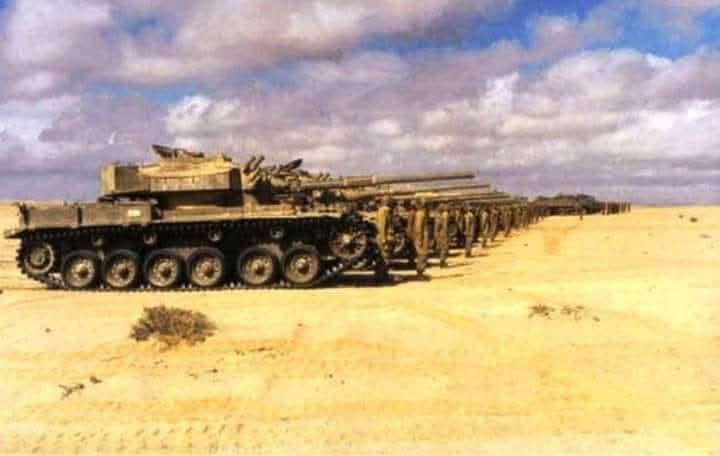
The longest and most substantial external conflict involving apartheid-era South Africa was the Angola Border War, which became intertwined with the Angolan Civil War and the wider Cold War.
South African forces entered Angola in 1975, following Angola's independence from Portugal. The conflict subsequently developed into a prolonged military confrontation involving South Africa, Angolan government forces, SWAPO and Cuban troops.
South African forces continued operating in Angola for years. South African History Online records the 1975 invasion and a major South African military presence in southern Angola during the 1980s.
The conflict eventually became linked to negotiations that contributed to the withdrawal of Cuban troops from Angola and South African forces from the region.
2. South Africa and Namibia
Before Namibia became independent in 1990, South Africa administered the territory then known as South West Africa.
The South African Defence Force fought against SWAPO, particularly its military wing PLAN, during a conflict that overlapped heavily with the Angolan Border War.
South African operations frequently crossed from Namibia into Angola because SWAPO maintained bases and rear areas there. The conflict therefore cannot be separated neatly from the wider fighting in southern Angola.
This was one of the major military campaigns of apartheid-era South Africa and lasted for decades.
3. South Africa's Raid on Matola in Mozambique
On 30 January 1981, South African commandos crossed into Mozambique and attacked locations in Matola, near Maputo.
The targets were associated with the African National Congress, which maintained structures in neighbouring countries while operating against apartheid.
South African History Online records that 12 ANC members were killed and three were kidnapped during the operation. The raid became one of the clearest examples of South African forces carrying out a cross-border military operation against an anti-apartheid organisation based in a neighbouring country.
The operation also contributed to worsening relations between South Africa and Mozambique.
4. South Africa and Lesotho
South African forces also carried out military operations in Lesotho, another country completely surrounded by South Africa.
The most notable operation occurred on 9 December 1982, when South African forces raided Maseru.
The operation targeted alleged ANC structures in the Lesotho capital. South African History Online records that 42 people died during the raid, including ANC members and civilians.
A second major raid took place in December 1985, again in Maseru. Historical records identify the operation as another South African military action against people associated with the ANC.
5. South Africa and Botswana
Botswana became another target during the apartheid era because ANC activists and other South African opponents lived and operated there.
South African forces conducted operations across the border, including a major raid on Gaborone in June 1985.
South African History Online records that 12 people were killed in the Gaborone operation, including South Africans, a Somali citizen, a Basotho child and Botswana citizens.
The raid became part of a wider pattern of cross-border operations by South African security forces during the 1980s.
6. South Africa Carried Out Operations in Zambia and Zimbabwe
South Africa's regional military activities were not limited to countries immediately bordering it.
In May 1986, South African forces carried out simultaneous air and ground strikes involving Botswana, Zambia and Zimbabwe, according to South African historical records.
These operations formed part of Pretoria's broader regional strategy during the final years of apartheid.
South African History Online describes this period as one in which military, political and covert measures were used across the region.
7. South Africa's Military Campaign in Mozambique Extended Beyond Individual Raids
South Africa's involvement in Mozambique was considerably broader than the 1981 Matola operation.
During the 1980s, Pretoria supported RENAMO, the armed movement fighting Mozambique's FRELIMO government. South African History Online records extensive South African assistance to RENAMO as well as direct sabotage and military operations in Mozambique.
The conflict had major consequences for Mozambique, which was already struggling with the effects of its civil war.
The Nkomati Accord, signed in 1984, was intended to end mutual support for armed groups operating against the other country. South Africa agreed to stop supporting RENAMO while Mozambique agreed to restrict ANC activities on its territory.
8. The Cassinga Attack in Angola
One of the most significant South African operations during the Angola conflict occurred at Cassinga in May 1978.
South African forces attacked a SWAPO camp at Cassinga in Angola. South African historical records put the number of deaths at more than 600.
The attack remains one of the most heavily documented and contested episodes of the South African Border War, with differing historical interpretations of the camp's military and civilian character.
South Africa's External Conflict History
South Africa's military involvement beyond its borders was unusually extensive during the apartheid period.
The Angola Border War was the largest sustained conflict, but South African forces also carried out operations in Mozambique, Lesotho, Botswana, Zambia and Zimbabwe. Some involved conventional military forces, while others consisted of raids, sabotage or covert operations.
The regional conflicts gradually changed as apartheid ended, South Africa's military posture shifted and Namibia gained independence. By the early 1990s, the era of South African cross-border military operations against neighbouring states had largely come to an end.