Africa has some of the world's most remarkable scuba diving destinations, with coral reefs, shipwrecks, underwater caves, kelp forests and marine habitats supporting sharks, rays, turtles and thousands of fish species.
While the Maldives is internationally recognised for its tropical reefs and marine life, African destinations offer a wider variety of diving environments. Egypt's Red Sea coast is known for coral reefs and wrecks, Mozambique attracts divers interested in manta rays and whale sharks, and South Africa offers shark diving and temperate-water marine ecosystems.
The Indian Ocean islands of Seychelles, Mauritius, Madagascar and Zanzibar also have established diving industries, with dive centres and resorts operating at numerous coastal locations.
The following 20 destinations were selected for their documented marine attractions, underwater landscapes, established diving activity and geographic diversity.
1. Ras Mohammed National Park – Egypt

Image Credit: getyourguide.com
Location: Southern Sinai Peninsula, Egypt
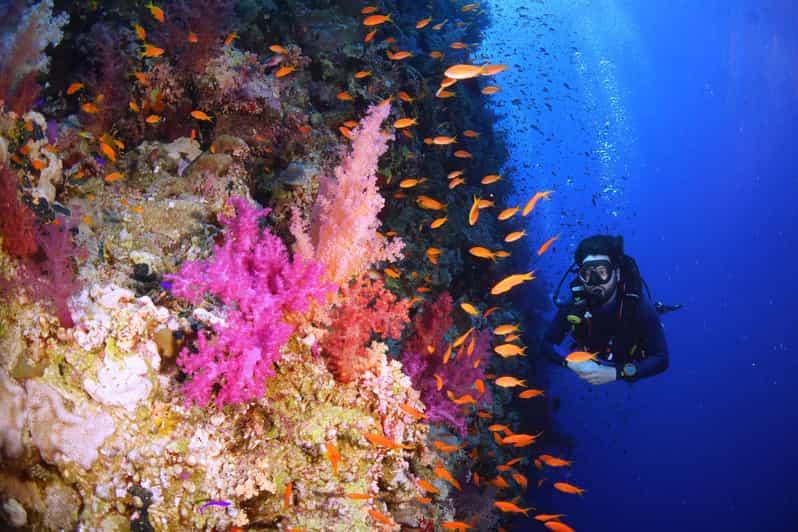
Ras Mohammed National Park is one of Egypt's best-known marine diving destinations.
The park protects coral reefs and coastal habitats near the entrance to the Gulf of Aqaba.
Famous dive sites include Shark Reef and Yolanda Reef, where divers encounter coral formations, reef fish and steep underwater drop-offs.
The Yolanda site is also associated with cargo remains from a shipwreck.
2. Tofo Beach – Mozambique

Image Credit: tofoscuba.com
Location: Inhambane Province, Mozambique
Tofo is a coastal diving destination internationally recognized for encounters with large marine animals.
The surrounding waters support manta rays, whale sharks, reef sharks, turtles and numerous fish species.
Dive sites include offshore reefs and deeper underwater formations.
Marine sightings vary seasonally and are not guaranteed. The region also supports research and conservation activities focused on large marine species.
3. Mnemba Atoll – Tanzania

Image Credit: tripstoearth.com
Location: Northeast of Zanzibar Island, Tanzania
Mnemba Atoll is one of Zanzibar's most recognized marine tourism areas.
The surrounding reefs support tropical fish, corals, turtles and other marine life.
Dive operators based in northeastern Zanzibar arrange excursions to designated sites around the atoll.
The surrounding waters are also used for snorkeling, although diving and snorkeling experiences differ according to location and conditions.
4. Aliwal Shoal – South Africa
Location: KwaZulu-Natal, South Africa
Aliwal Shoal is an offshore reef system near Umkomaas.
The area is known for shark encounters, including seasonal aggregations of ragged-tooth sharks.
Its underwater environment includes rocky reefs, marine invertebrates and shipwreck sites.
The reef is part of a protected marine environment and attracts divers from South Africa and abroad.
Diving conditions can include currents and variable visibility.
5. Bazaruto Archipelago – Mozambique
Location: Inhambane Province, Mozambique
The Bazaruto Archipelago consists of islands surrounded by marine habitats, reefs and extensive shallow-water environments.
The area forms part of Bazaruto Archipelago National Park.
Marine life includes reef fish, turtles, rays and other species associated with the western Indian Ocean.
The archipelago is also recognized for its dugong population.
Diving excursions operate from island resorts and mainland tourism centers such as Vilankulo.
6. Sodwana Bay – South Africa

Image Credit: south-africa-guide.com
Location: KwaZulu-Natal, South Africa
Sodwana Bay is one of South Africa's established tropical and subtropical reef diving destinations.
It lies within the iSimangaliso marine conservation area.
The region contains reef systems commonly identified by their distance from the launch area, including Two Mile Reef and Five Mile Reef.
Divers encounter coral formations, reef fish, turtles and seasonal marine visitors.
Sodwana Bay is also associated with scientific research into marine biodiversity.
7. Blue Hole – Dahab, Egypt
Location: Dahab, Sinai Peninsula, Egypt
The Blue Hole is a famous underwater sinkhole on Egypt's Red Sea coast.
Its circular formation and steep underwater walls have made it internationally recognized among divers.
The site includes shallow reef areas as well as very deep sections.
The deeper parts are associated with significant diving hazards and have been the location of fatal accidents.
Recreational diving takes place only within appropriate depth, training and supervision limits.
8. Nosy Be – Madagascar
Location: Northwestern Madagascar
Nosy Be is one of Madagascar's main island tourism destinations.
Its surrounding waters contain coral reefs, reef fish, turtles and other Indian Ocean marine species.
Nearby islands and marine protected areas provide additional diving locations.
The region is also associated with seasonal whale shark sightings.
Dive centers operate from Nosy Be and nearby coastal tourism areas.
9. Watamu Marine National Park – Kenya

Image Credit: timbuktutravel.com
Location: Kilifi County, Kenya
Watamu Marine National Park protects coral reef habitats along Kenya's Indian Ocean coastline.
The marine environment supports reef fish, turtles, corals and other marine organisms.
The park is part of the wider Watamu marine conservation landscape.
Diving and snorkeling activities are offered through authorized operators.
Watamu is also associated with sea turtle conservation programmes.
10. Shark Bank – Seychelles
Location: Near Mahé, Seychelles
Shark Bank is a diving site off the coast of Mahé.
The underwater landscape includes granite formations, rocky structures and marine habitats.
Divers may encounter reef sharks, rays, schools of fish and other marine species.
The site is generally associated with deeper recreational diving and can experience currents.
It is one of several established dive locations accessible from Mahé.
11. Mafia Island Marine Park – Tanzania
Location: Mafia Island, Tanzania
Mafia Island Marine Park was established in 1995 and protects marine habitats around the island.
Its waters contain coral reefs, seagrass beds, mangroves and reef fish.
Chole Bay is one of the principal areas associated with diving activities.
Mafia Island is also known for seasonal whale shark encounters in nearby waters.
The marine park supports conservation, fisheries management and tourism activities.
12. Ponta do Ouro – Mozambique
Location: Southern Mozambique
Ponta do Ouro is a coastal diving destination near Mozambique's border with South Africa.
The area is associated with reef diving, shark encounters and marine research.
Its waters support several shark species, rays, turtles and reef fish.
The wider coastal region includes protected marine habitats.
Local operators arrange boat-based diving excursions, with site access depending on sea conditions.
13. Grand Baie – Mauritius
Location: Northern Mauritius
Grand Baie is a major coastal tourism center with established scuba diving operations.
Nearby diving areas include reefs, rocky underwater formations and shipwreck sites.
Marine life includes tropical fish, moray eels, rays and other reef-associated species.
The region offers diving activities through licensed operators and resort-based centers.
Water conditions and visibility vary by season and individual dive site.
14. Sainte-Marie Island – Madagascar
Location: Eastern Madagascar
Sainte-Marie, also known as Nosy Boraha, is an island off Madagascar's eastern coast.
The surrounding waters contain coral reefs and marine habitats used by tropical fish and other species.
The region is particularly known for humpback whale migration during the southern winter.
Whale-watching is a separate activity from scuba diving, and encounters are governed by marine wildlife regulations.
The island has tourism accommodation and operators offering marine excursions.
15. Diani Beach – Kenya

Image Credit: galu-ecolodge.com
Location: Kwale County, Kenya
Diani Beach is a major coastal resort destination south of Mombasa.
Offshore reefs provide diving opportunities involving coral formations, reef fish, turtles and other marine species.
Local dive centers operate excursions to sites along the southern Kenyan coastline.
Diani also provides access to nearby marine environments around Tiwi and the wider Kwale coast.
The region is associated with both recreational scuba diving and introductory diving programmes.
16. Sal Island – Cape Verde
Location: Cape Verde, Atlantic Ocean
Sal is one of Cape Verde's principal beach tourism islands.
The island has established dive centers, particularly around Santa Maria.
Its underwater attractions include rocky reefs, caves, volcanic formations and wrecks.
Marine species found in Cape Verdean waters include rays, reef fish, turtles and sharks.
Atlantic Ocean conditions distinguish Sal from the warm, sheltered lagoons associated with many Indian Ocean destinations.
17. False Bay – South Africa
Location: Western Cape, South Africa
False Bay is a large coastal bay near Cape Town.
Its diving environments include kelp forests, rocky reefs and underwater habitats supporting temperate-water marine species.
The region is associated with sharks, seals, octopuses and numerous fish species.
Water temperatures are generally cooler than those at tropical African diving destinations.
Visibility and sea conditions vary considerably throughout the year.
18. Sharm El Sheikh – Egypt

Image Credit: vialala.com
Location: Southern Sinai Peninsula, Egypt
Sharm El Sheikh is one of Africa's largest established scuba diving tourism centers.
Its location provides access to Red Sea reefs, underwater walls and shipwreck excursions.
Popular diving areas include Tiran Island's reefs and sites associated with Ras Mohammed National Park.
The region supports extensive coral formations and numerous reef fish species.
Sharm El Sheikh has dive resorts, training centers and operators offering boat-based diving excursions.
19. Port Launay Marine National Park – Seychelles
Location: Mahé, Seychelles
Port Launay Marine National Park protects coastal marine habitats on the western side of Mahé.
The area includes coral reefs, sheltered bays and habitats supporting reef fish and other marine organisms.
It is used for snorkeling and marine tourism, with diving activities arranged through local operators where permitted.
The surrounding coastline also has established resort accommodation.
Its protected status forms part of Seychelles' wider marine conservation network.
20. Djibouti's Gulf of Tadjoura – Djibouti

Image Credit: assaltrip.com
Location: Gulf of Tadjoura, Djibouti
The Gulf of Tadjoura is connected to the Gulf of Aden and forms part of Djibouti's marine tourism region.
Its waters are known for seasonal whale shark aggregations, particularly around the western gulf and nearby coastal areas.
The region also contains reefs and marine habitats supporting fish, rays and other species.
Djibouti has established diving and marine excursion operators.
Whale shark encounters are seasonal and depend on natural wildlife movements.