Packing for an African safari depends on the destination, season, accommodation and activities included in the itinerary.
African safari destinations also experience different weather conditions. East African highlands can have cold mornings, southern African winters can bring low overnight temperatures, and tropical regions may experience heavy seasonal rainfall.
Most safari operators recommend practical clothing in neutral colors, comfortable footwear, sun protection and luggage suitable for small safari vehicles or light aircraft. Some fly-in camps impose strict baggage limits, particularly on soft-sided luggage.
The following 25 items cover clothing, travel documents, personal equipment and other essentials commonly required for safari travel.
1. Passport
International visitors require a valid passport for entry into African safari destinations. Passport validity requirements differ by country, with some destinations requiring at least six months of remaining validity. Immigration authorities may also require blank passport pages.
2. Visa or Electronic Travel Authorization
Entry requirements depend on the traveler's nationality and destination. Kenya operates an electronic travel authorization system for many foreign visitors, subject to exemptions. Other countries use visas, visa-free entry arrangements or electronic visa systems.
3. Travel Insurance Documents
Travel insurance policies differ in their coverage of medical treatment, evacuation, trip cancellation and lost baggage. Safari destinations may be located several hours from major hospitals, particularly in remote conservation areas.
4. Vaccination Records
Some African countries require yellow fever vaccination certificates from travelers arriving from specified countries or regions. Requirements depend on travel history and destination. Other vaccination recommendations are issued by national health authorities and travel medicine providers.
5. Prescription Medication
Travelers who use prescription medication commonly carry sufficient supplies for their journey in original labelled packaging. Import restrictions apply to certain medicines, and documentation requirements vary by country.
6. Neutral-Colored Safari Shirts
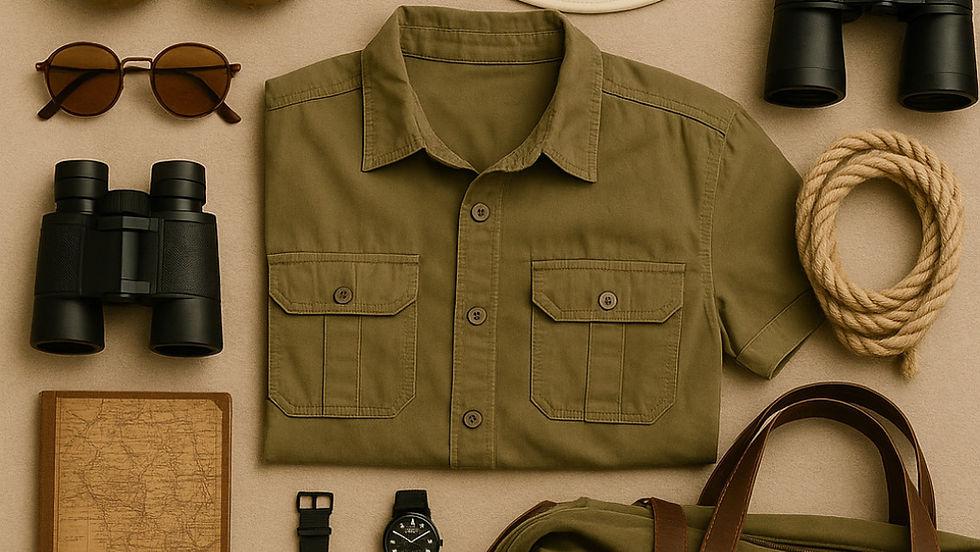
Khaki, beige, olive and brown clothing is commonly worn on wildlife safaris. Lightweight, breathable fabrics are useful in warm conditions, while long sleeves provide additional coverage against sunlight and insects.
7. Lightweight Long Trousers
Long trousers are practical for game drives, nature walks and evenings outdoors. Lightweight fabrics provide coverage while remaining comfortable in warm weather. Some safari camps recommend long trousers for guided walking activities.
8. Warm Fleece or Jacket
Early morning game drives can be cold, particularly in elevated regions of Kenya, Tanzania and South Africa. Open safari vehicles also expose passengers to wind. A fleece or insulated jacket is commonly included in safari packing lists.
9. Waterproof Rain Jacket
Rainfall patterns vary across Africa. Waterproof jackets are useful during rainy seasons and in destinations with unpredictable weather. Lightweight jackets are easier to carry during game drives and excursions.
10. Comfortable Walking Shoes
Closed walking shoes are suitable for most safari camp activities and short guided walks. Specialist walking safaris may require more supportive footwear, depending on terrain and the operator's requirements.
11. Sandals or Casual Footwear
Many safari camps have swimming pools, outdoor dining areas and accommodation connected by short pathways. Sandals or casual footwear are commonly used around camp when guests are not participating in wildlife activities.
12. Wide-Brimmed Hat
A wide-brimmed hat provides shade for the face, ears and neck during outdoor activities. Safari vehicles may have open roofs, and passengers can spend several hours exposed to direct sunlight.
13. Sunglasses
Sunglasses help reduce glare during game drives, particularly in open grasslands, desert environments and areas with bright reflective surfaces. UV-protective lenses are commonly used for outdoor travel.
14. Sunscreen
Sun exposure can be significant during daytime safari activities. Broad-spectrum sunscreen is useful for exposed skin, including the face, hands and neck. Water-resistant formulations are commonly used during outdoor excursions.
15. Insect Repellent
Mosquitoes and other biting insects occur in many African safari destinations. Repellents containing recognized active ingredients such as DEET or picaridin are commonly used for insect-bite prevention. Local insect activity varies by season and habitat.
16. Binoculars
Binoculars are useful for observing birds, distant mammals and animals resting in vegetation. Common safari binocular configurations include 8×42 and 10×42, indicating magnification and objective lens diameter.
17. Camera and Memory Cards
Wildlife photography is a major activity on African safaris. Cameras with optical zoom lenses are useful for photographing animals at a distance. Spare memory cards provide additional storage during multi-day trips.
18. Spare Camera Batteries
Safari days often begin before sunrise and may continue into the afternoon. Access to charging facilities varies between camps, particularly in remote locations using solar power or generators.
19. Portable Power Bank
A power bank provides additional charging capacity for smartphones and other small electronic devices. Airlines impose restrictions on lithium batteries, and power banks generally belong in cabin baggage rather than checked luggage.
20. Universal Travel Adapter
Electrical sockets differ across African countries. South Africa commonly uses Type M and newer Type N sockets, while Kenya uses Type G. A universal adapter is useful for travelers visiting several countries, although not every universal adapter supports every socket type.
21. Reusable Water Bottle
Many safari lodges provide drinking water through refill stations or bottled-water services. A reusable bottle is convenient during vehicle transfers, guided excursions and travel between camps.
22. Small Daypack
A compact daypack can carry sunscreen, water, a camera, personal medication and additional clothing during excursions. Some safari operators recommend soft bags because storage space inside vehicles is limited.
23. Soft-Sided Travel Bag
Small aircraft used for transfers between safari destinations frequently have baggage restrictions. Soft-sided duffel bags are often preferred because they fit more easily into limited luggage compartments. Weight limits vary by airline and aircraft.
24. Personal Toiletries
Safari lodges often provide basic toiletries, but the range varies by accommodation category. Personal hygiene products, contact lens supplies and other specialized items may not be readily available in remote camps.
25. Offline Maps and Travel Documents
Mobile network coverage can be limited in remote wildlife areas. Downloaded maps, electronic booking confirmations, emergency contact information and copies of important travel documents provide useful reference information without requiring a continuous internet connection.
How Safari Packing Requirements Differ Across Africa
Safari packing requirements vary according to geography and season.
In Kenya and Tanzania, elevated wildlife areas such as the Maasai Mara and Ngorongoro can experience cool mornings even when daytime temperatures are warm.
In South Africa, winter game drives in Kruger National Park and nearby reserves may require warmer clothing, particularly in open vehicles.
In Botswana's Okavango Delta, water-based activities and seasonal flooding affect the types of excursions offered. Some camps provide specialist equipment for boating and wildlife activities.
In Namibia, desert environments can produce considerable differences between daytime and nighttime temperatures.
Safari operators may also impose luggage restrictions, prohibit certain clothing colors for particular activities or supply equipment such as binoculars and rain ponchos.