Some African islands are known for beautiful beaches and tropical landscapes. Others are associated with imprisonment, forced labor, colonial conflict, shipwrecks and dangerous volcanic activity.
Several were used as prisons or military outposts. Others became important locations during the transatlantic slave trade.
These islands have documented histories that explain their reputation. References to haunting or supernatural activity are identified as folklore rather than established fact.
1. Robben Island – South Africa

image credit: goway.com
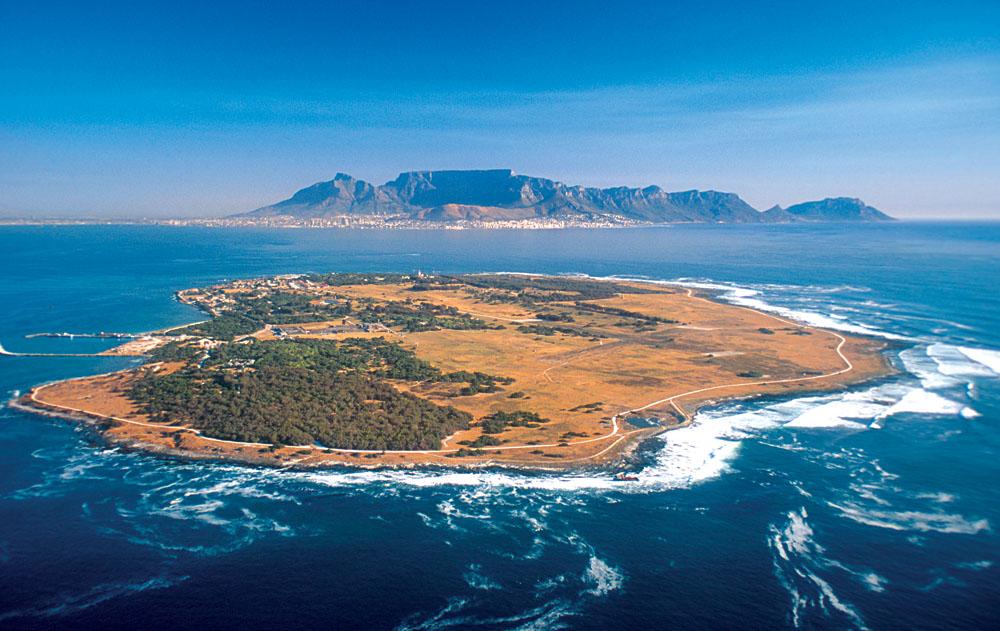
Robben Island lies approximately seven kilometers off the coast of Cape Town.
It is best known as the prison where Nelson Mandela spent 18 of his 27 years in detention under apartheid.
The island was also used at different periods as a place of imprisonment, isolation and medical quarantine.
Today, it is a UNESCO World Heritage Site and museum.
2. Gorée Island – Senegal

Gorée Island lies off the coast of Dakar, Senegal.
European colonial powers controlled the island at different times, and it became associated with the Atlantic slave trade.
The House of Slaves is among its best-known historical buildings.
Although historians debate the precise number of enslaved people transported through Gorée, its connection to slavery and colonial commerce is documented.
3. Bunce Island – Sierra Leone

image credit: bigworldsmallpockets.com
Bunce Island lies in the Sierra Leone River estuary.
British traders established a slave-trading fort there during the seventeenth century.
Enslaved Africans were transported from the island to plantations in the Americas, including South Carolina and Georgia.
The surviving fort ruins remain an important historical site.
4. Changuu Island – Tanzania

image credit: gogo.se
Changuu Island, also known as Prison Island, lies off Zanzibar's main island of Unguja.
During the nineteenth century, the island was associated with the detention of rebellious, enslaved people.
A prison building was later constructed but was not used for its originally intended purpose. The site subsequently served as a quarantine station.
Today, the island is also known for its giant tortoise sanctuary.
5. Mozambique Island – Mozambique

image credit: craftedafrica.com
Mozambique Island, or Ilha de Moçambique, lies off the northern coast of Mozambique.
The island served as a major Portuguese colonial administrative and trading center for centuries.
Its historical buildings include the Fortress of São Sebastião, constructed during the sixteenth century.
The island was also connected to Indian Ocean trade networks, including the trafficking of enslaved people.
6. São Tomé – São Tomé and Príncipe

image credit: visagov.com
São Tomé is the larger of the two principal islands forming São Tomé and Príncipe.
Portuguese colonizers developed sugar plantations on the island beginning in the fifteenth century, using enslaved African labor.
Cocoa plantations later became a major part of the colonial economy.
The island's plantation buildings and historic estates preserve evidence of this history.
7. Grande Comore – Comoros

image credit: volcano.si.edu
Grande Comore is the largest island in the Comoros archipelago.
It contains Mount Karthala, an active volcano rising more than 2,300 meters above sea level.
Major eruptions occurred in 2005, affecting communities and infrastructure.
The island's volcanic activity is a documented natural hazard rather than a supernatural phenomenon.
8. Mayotte – Comoros Archipelago

image credit: traveldoctor.com.au
Mayotte lies in the northern Mozambique Channel and is administered as a French overseas department.
The island experienced significant seismic activity beginning in 2018.
Scientific investigations linked the activity to the formation of a new underwater volcano east of Mayotte.
The discovery followed a period of unusual earthquakes that had affected local communities.
9. Ilha de Luanda – Angola

Ilha de Luanda is a narrow coastal landform extending along Angola's capital.
Despite its name, it is a peninsula rather than a separate island.
It has a long association with fishing communities and the historical development of Luanda.
Its inclusion in discussions of African islands requires this geographical distinction.
10. Inaccessible Island – Tristan da Cunha

image credit: ontheworldmap.com
Inaccessible Island is a remote, uninhabited volcanic island in the South Atlantic Ocean.
It belongs to the Tristan da Cunha group, a British overseas territory far west of southern Africa.
The island has steep cliffs and difficult landing conditions. It is protected for its wildlife and forms part of a UNESCO World Heritage Site.
Its isolation and restricted access distinguish it from the populated islands elsewhere on this list.