Africa's political history includes numerous assassinations, suspicious deaths and murders involving presidents, government officials, journalists, independence activists and political opponents.
Some cases became major national investigations, while others generated international inquiries, public protests and decades of unanswered questions. In several instances, people were convicted, but questions surrounding the wider circumstances or possible involvement of other individuals remained unresolved.
The following list includes significant African political killings and murders, distinguishing unresolved investigations from cases where perpetrators were identified or legal proceedings took place.
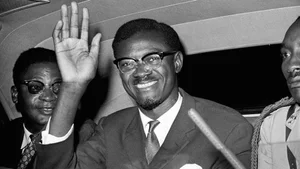
1. Patrice Lumumba – Democratic Republic of Congo (1961)
Patrice Lumumba was the first Prime Minister of the Democratic Republic of Congo following independence from Belgium in June 1960.
He was removed from office during the country's political crisis and subsequently imprisoned. On 17 January 1961, Lumumba and two associates, Maurice Mpolo and Joseph Okito, were transferred to Katanga, where they were killed.
A United Nations Commission of Investigation examined their deaths. Its 1961 report concluded that evidence indicated the three men had been killed on 17 January rather than on the later date initially announced by Katangan authorities.
A Belgian parliamentary investigation subsequently examined the role of Belgian officials in the events. Although important findings were established, questions surrounding the full international political responsibility for Lumumba's death continued to attract historical attention.
2. Thomas Sankara – Burkina Faso (1987)
Thomas Sankara was Burkina Faso's president from 1983 until his assassination on 15 October 1987 during a coup in Ouagadougou.
His death became the subject of a long legal struggle involving his family and supporters. For years, questions surrounding the circumstances of the assassination were not fully investigated.
In 1997, his wife, Mariam Sankara, filed a complaint seeking an investigation into his death and the falsification of his death certificate.
The case eventually proceeded through judicial processes, becoming one of the most significant investigations into a political assassination in modern African history.
3. Dulcie September – South Africa (1988)
Dulcie September was an anti-apartheid activist and African National Congress representative in France.
She was assassinated on 29 March 1988 outside the ANC office in Paris. Her murder attracted international attention because of her political activities and work against apartheid.
Several theories emerged concerning possible involvement by apartheid-era security networks and other actors. However, no assassin was officially brought to justice for the killing.
Her case remains one of the prominent unresolved political assassinations associated with the anti-apartheid struggle.
4. Ahmed Hussein-Suale – Ghana (2019)
Ahmed Hussein-Suale was an investigative journalist associated with Tiger Eye PI, a Ghanaian investigative organization.
He was murdered on 16 January 2019. His death occurred after public controversy and threats connected to investigative journalism.
The Committee to Protect Journalists reported in January 2023 that, despite arrests and police assurances of progress, nobody had been tried or convicted for his murder at that point.
His killing became a major issue in discussions about journalist safety and accountability in Ghana.
5. Deyda Hydara – The Gambia (2004)
Deyda Hydara was a Gambian journalist, editor of The Point newspaper and president of the Gambia Press Union.
He was murdered on 16 December 2004 while returning home from work.
Hydara was known for his criticism of government restrictions on press freedom. His death attracted condemnation from media organizations and press freedom advocates.
The Media Foundation for West Africa reported that his murder remained unsolved ten years after the killing.
6. George Abanga – Ghana (2015)
George Abanga was a journalist working for Success FM in Ghana.
He was murdered in September 2015 after reporting on a fertilizer theft in the Brong-Ahafo Region.
The circumstances of his death raised questions about whether the killing was connected to his journalistic activities.
A suspect was taken into custody, but the circumstances surrounding the confession and the suspect's responsibility were questioned. The case was recorded as unresolved by Mémoire Vive.
7. Alpha Amadu Bah – Sierra Leone (1999)
Alpha Amadu Bah was a senior sports reporter for Sierra Leone's Independent Observer newspaper.
He was killed on 17 January 1999 during the violence surrounding the invasion of Freetown by rebel forces.
His death occurred during a period when journalists and media organizations faced serious threats.
Mémoire Vive records that no individual was arrested, charged or convicted for his murder, leaving the case unresolved.
8. Robert Ouko – Kenya (1990)
Robert Ouko served as Kenya's Minister for Foreign Affairs and was one of the country's prominent government officials.
His disappearance in February 1990 and subsequent death generated enormous public attention.
The circumstances surrounding his death became the subject of an official inquiry and extensive political controversy.
The case remains one of the most widely discussed unresolved political killings in Kenya's history, with questions about responsibility and the full circumstances continuing to attract attention.
9. Josiah Mwangi Kariuki – Kenya (1975)
Josiah Mwangi Kariuki, commonly known as JM Kariuki, was a Kenyan politician and former Member of Parliament.
He was an outspoken public figure whose political activities and criticism of inequality attracted considerable attention.
His disappearance and death in March 1975 caused widespread public concern. His case became a major political controversy during President Jomo Kenyatta's administration.
Although investigations established important details surrounding his death, the wider political questions surrounding the killing have remained part of Kenya's historical debate.
10. Tom Mboya – Kenya (1969)
Tom Mboya was Kenya's Minister for Economic Planning and Development and one of the country's most influential independence-era politicians.
He was assassinated in Nairobi on 5 July 1969.
His death caused national shock because of his political influence and prominence within the ruling government.
A man was convicted for the killing, however, questions about possible wider political involvement have remained a subject of historical discussion.
11. Pio Gama Pinto – Kenya (1965)
Pio Gama Pinto was a Kenyan journalist, politician and independence activist.
He was assassinated in Nairobi on 25 February 1965.
Pinto was associated with progressive political movements and played an important role in the country's independence-era political environment.
A person was convicted in connection with his murder, but the broader political circumstances and possible involvement of others have continued to attract historical interest.
12. Onkgopotse Tiro – Botswana (1974)
Onkgopotse Tiro was a South African student activist associated with the Black Consciousness Movement.
He was assassinated in Botswana in 1974 through a parcel-bomb attack.
Tiro had left South Africa because of political pressure and continued his activism while in exile.
His death became one of the notable assassinations associated with apartheid-era political repression outside South Africa. The killing remains part of the history of attacks against activists living in exile.
13. Joe Gqabi – Zimbabwe (1981)
Joe Gqabi was an African National Congress representative and anti-apartheid activist based in Zimbabwe.
He was assassinated in Harare in July 1981.
Gqabi was among the South African activists targeted while living outside their home country during the apartheid era.
His killing forms part of the wider record of political assassinations involving anti-apartheid activists in neighboring countries.
14. Rick Turner – South Africa (1978)
Rick Turner was a political scientist and anti-apartheid activist.
He was assassinated at his home in Durban on 8 January 1978.
Turner was known for his political writing and involvement in South Africa's labor and student movements.
His death became one of the significant political assassinations of the apartheid period.
15. Griffiths Mxenge – South Africa (1981)
Griffiths Mxenge was a South African human rights lawyer and anti-apartheid activist.
He was murdered in November 1981.
His legal work and political involvement made him an important figure in the struggle against apartheid.
His case later featured in the work of South Africa's Truth and Reconciliation Commission, which examined politically motivated killings and the conduct of apartheid-era security structures.
16. Robert and Jean Smit – South Africa (1977)
Robert Smit was a South African politician associated with the National Party, while his wife Jean was also killed in the same case.
Their murders became a major political and investigative controversy during apartheid.
The South African History Archive later included the case in its collection of historical murder investigations and Truth and Reconciliation Commission-related records.
The case remains among the notable unresolved or incompletely explained political killings from the apartheid period.
17. Amílcar Cabral – Guinea-Bissau (1973)
Amílcar Cabral was a leading independence activist and intellectual who helped establish the African Party for the Independence of Guinea and Cape Verde.
He was assassinated in Conakry, Guinea, on 20 January 1973.
Cabral played a major role in the independence struggle against Portuguese colonial rule.
His death was a significant event in the history of African liberation movements. Although individuals involved in the immediate assassination were identified, questions about the wider organization and political circumstances surrounding the killing have remained subjects of historical research.
18. Seth Sendashonga – Kenya (1998)
Seth Sendashonga was a former Rwandan interior minister who went into exile following political disagreements within the post-genocide Rwandan government.
He was assassinated in Nairobi in May 1998.
His death became a significant incident involving a former senior African government official living outside his country.
The killing attracted attention because of his political history and the circumstances surrounding his exile.
19. John Paul Oulo – Kenya (2009)
John Paul Oulo was a Kenyan human rights activist who was killed in March 2009.
His death occurred during a period of concern about attacks against activists and individuals involved in documenting human rights violations.
His case is associated with the killing of fellow activist Oscar Kamau Kingara.
20. Oscar Kamau Kingara – Kenya (2009)
Oscar Kamau Kingara was a Kenyan human rights lawyer and founder of the Oscar Foundation Free Legal Aid Clinic.
He was killed in Nairobi on 5 March 2009 alongside John Paul Oulo.
The two activists were associated with human rights work, including documentation of alleged abuses.
Their deaths became part of a wider debate about the safety of Kenyan human rights defenders.
21. Anton Lubowski – Namibia (1989)
Anton Lubowski was a Namibian lawyer and anti-apartheid activist associated with the South West Africa People's Organization.
He was assassinated in Windhoek in September 1989.
His killing took place during the period leading to Namibia's independence in 1990.
Lubowski's death became one of the prominent political killings associated with the final phase of South African control over Namibia.
22. David Webster – South Africa (1989)
David Webster was an academic and anti-apartheid activist at the University of the Witwatersrand.
He was assassinated in Johannesburg in May 1989.
Webster was known for his research into political violence and security structures during apartheid.
Unlike several other cases in this list, a perpetrator was subsequently identified and convicted. His inclusion demonstrates why the legal status of each historical killing must be distinguished rather than describing every political assassination as unsolved.
23. Jeanette and Katryn Schoon – Angola (1984)
Jeanette Schoon and her daughter Katryn were killed in Angola in June 1984 in an apartheid-era security operation.
Their deaths became part of investigations into attacks against South African anti-apartheid activists living in exile.
The case was examined in connection with the activities of apartheid security networks and the broader campaign against ANC supporters outside South Africa.
24. Sindiso Magaqa – South Africa (2017)
Sindiso Magaqa was a South African politician and former secretary-general of the ANC Youth League.
He was attacked in July 2017 and died in September of the same year.
Magaqa was associated with anti-corruption activities and political disputes in KwaZulu-Natal.
His killing became part of wider investigations into political violence in the province. Al Jazeera reported that KwaZulu-Natal had experienced more than 500 political assassinations since South Africa's first democratic elections in 1994.
25. Patrick Makau and Other Anti-Apartheid Activists Targeted in Exile
Patrick Makau was among the ANC members recorded in the history of political attacks against activists in southern Africa.
South African History Online records an attack in Manzini, Swaziland, on 4 June 1980 involving Patrick Makau and his child.
The incident forms part of a broader historical record of attacks against South African activists and their families outside the country during apartheid.