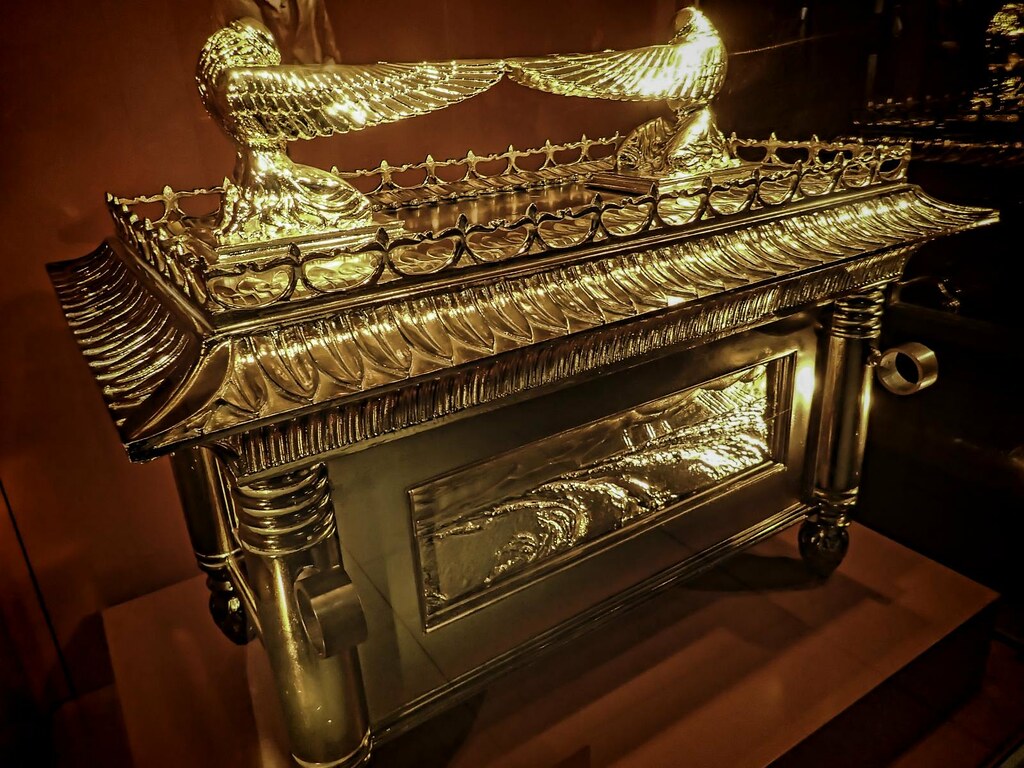
For centuries, Ethiopia has maintained one of the world's most extraordinary religious traditions: that the biblical Ark of the Covenant rests in the ancient city of Axum.
According to the Hebrew Bible, the Ark was a sacred chest associated with the tablets of the Ten Commandments. Its eventual fate is not clearly documented in the biblical accounts, leaving one of religious history's most enduring mysteries.
The Ethiopian Orthodox Tewahedo Church maintains that the Ark is kept at the Church of Our Lady Mary of Zion in Axum. The claim is central to Ethiopian religious identity, but the alleged relic has never undergone publicly documented scientific examination.
Five pieces of historical and cultural evidence explain why Ethiopia's claim has survived for generations.
1. The Church of Our Lady Mary of Zion Has a Long Tradition of Guarding the Ark
The strongest physical focus of Ethiopia's claim is the Church of Our Lady Mary of Zion in Axum, a city in the northern Tigray region.
The Ethiopian Orthodox Church identifies a chapel within the church compound as the Ark's resting place. According to the tradition, a designated guardian monk protects the sacred object and restricts access to it.
Visitors, researchers and most clergy are not permitted to inspect the claimed relic.
This strict guardianship has helped preserve the tradition over generations. However, it also prevents independent confirmation that the object inside is the biblical Ark.
Axum itself was the capital of a major ancient African kingdom and became an important centre of Christianity during the fourth century.
The location therefore has genuine historical importance, even though the Ark's presence remains unverified.
2. The Kebra Nagast Describes How the Ark Reached Ethiopia
One of the most important written sources supporting the Ethiopian tradition is the Kebra Nagast, meaning Glory of the Kings.
The text, compiled in its surviving Ge'ez form during the medieval period, connects Ethiopia's royal dynasty to King Solomon and the Queen of Sheba.
According to its narrative, their son Menelik I travelled to Jerusalem and later brought the Ark to Ethiopia.
The story became central to the legitimacy of Ethiopia's Solomonic dynasty, which ruled for centuries before the monarchy ended in 1974.
The Kebra Nagast is valuable evidence of the tradition's historical development, but it is not contemporary documentation of events in Solomon's supposed lifetime.
Historians distinguish between a medieval text preserving a religious claim and archaeological evidence proving that the claim occurred.
3. Ethiopia Has an Ancient Christian History Connected to Axum
Christianity became established in the Kingdom of Axum during the fourth century, particularly under King Ezana.
Axumite coins, inscriptions and archaeological discoveries provide independent evidence of this early Christian transformation.
Ethiopia subsequently developed one of the world's oldest continuous Christian traditions, preserving distinctive religious practices, manuscripts and liturgical customs.
The Ethiopian Church's account of the Ark belongs to this broader history.
Its longstanding importance helps explain why the tradition has remained influential rather than disappearing as a minor local legend.
However, the fourth-century evidence for Axumite Christianity does not establish that an Israelite sacred chest arrived there many centuries earlier.
The connection is historically significant without being proof of the Ark's physical location.
4. Ethiopian Churches Preserve Sacred Replicas Called Tabots
An unusual feature of Ethiopian Orthodox Christianity is the central importance of the tabot.
A tabot is a consecrated representation associated with the Tablets of the Law and the Ark of the Covenant. It is kept within the sanctuary of an Ethiopian Orthodox church.
During major religious celebrations, including Timkat, priests carry covered tabots in public processions.
These practices demonstrate how deeply the Ark tradition is embedded in Ethiopian worship.
Rather than existing only in a historical manuscript, the tradition is reflected in religious objects, ceremonies and church architecture.
Still, the existence of tabots does not independently demonstrate that the original biblical Ark is in Ethiopia. It establishes the importance of Ark symbolism in Ethiopian religious life.
5. Ethiopia's Ark Tradition Has Survived Despite Centuries of Political Change
Ethiopia's Ark claim has persisted through dynastic changes, foreign invasions, religious disputes and the end of imperial rule.
Axum remained a major sacred centre even after Ethiopia's political capital moved elsewhere.
The Church of Our Lady Mary of Zion continued to occupy a special position in Ethiopian Christianity, and the Ark tradition remained associated with the site.
Such continuity is noteworthy because many ancient religious traditions have changed substantially or disappeared.
Yet continuity alone cannot establish the historical accuracy of a claim.
A tradition can be sincerely preserved for centuries without providing verifiable evidence about an object supposedly originating thousands of years earlier.
Has the Ark of the Covenant Actually Been Found in Ethiopia?
No publicly authenticated discovery has established the location of the biblical Ark of the Covenant.
There is no independently verified archaeological record demonstrating that the object kept in Axum, if examined, is the Ark described in the Hebrew Bible.
The five points above are evidence of Ethiopia's longstanding religious claim, not five scientific proofs of the Ark's presence.
What makes Ethiopia's connection extraordinary is the combination of an ancient Christian centre, a powerful royal narrative, sacred religious practices and a tradition that continues into the present.
The Ark's physical whereabouts remain unknown to historians and archaeologists.