Rome built one of history's most famous empires, controlling territories across Europe, North Africa and western Asia. Its armies, roads and cities became symbols of imperial power.
But Africa had its own powerful states, some of which fought Rome directly, while others controlled major trading networks and built extraordinary cities.
These African kingdoms and empires were not all equal to Rome in territory, population or military strength. Several also flourished centuries after the Western Roman Empire collapsed.
What they shared was substantial influence over the political, economic and cultural life of their regions.
1. Ancient Egypt — Around 3100–30 BCE
Ancient Egypt developed one of the world's longest-lasting state traditions along the Nile.
During the New Kingdom, approximately 1550–1070 BCE, Egyptian rulers expanded their influence into Nubia and parts of the eastern Mediterranean.
Pharaohs commanded large armies and sponsored monumental construction projects.
The temples at Karnak and Luxor demonstrate the resources and organizational capacity of the Egyptian state.
Egypt's greatest imperial expansion occurred long before Rome became an empire.
2. Kingdom of Kush — Around 1070 BCE–350 CE
The Kingdom of Kush emerged in the Nile Valley of present-day Sudan.
Its rulers controlled important trade routes and established powerful centers at Napata and Meroë.
During the eighth century BCE, Kushite kings conquered Egypt and established the Twenty-Fifth Dynasty.
Kush later confronted Roman forces in the late first century BCE.
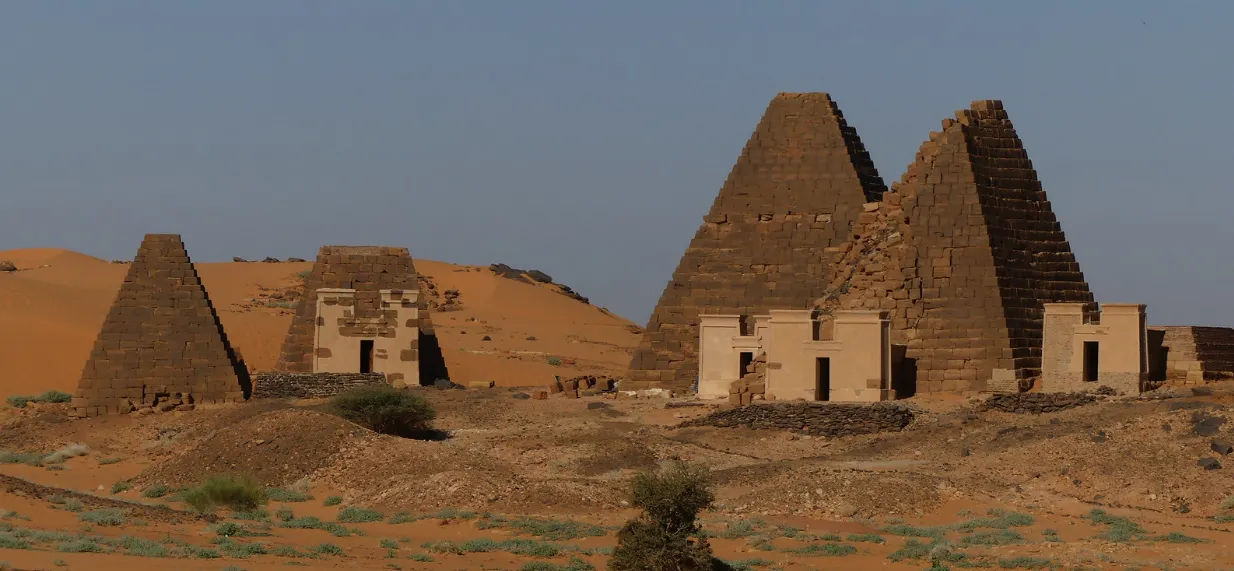
The kingdom's surviving pyramids at Meroë remain among Africa's most impressive ancient monuments.
3. Carthage — Around 814–146 BCE
Carthage developed into a major Mediterranean commercial and military power in present-day Tunisia.
Its trading networks extended across North Africa, Iberia and Mediterranean islands.
Carthage became Rome's greatest western Mediterranean rival during the Punic Wars.
The Carthaginian commander Hannibal famously crossed the Alps during the Second Punic War and inflicted major defeats on Roman armies.
Rome eventually destroyed Carthage in 146 BCE, ending its independence.
4. Kingdom of Aksum — Approximately First–Eighth Centuries CE
Aksum emerged in the highlands of present-day Ethiopia and Eritrea.
Its rulers controlled valuable trading connections linking the Red Sea, Arabia and the Indian Ocean.
The kingdom issued coins, erected enormous stone stelae and developed a sophisticated political system.
During the fourth century, King Ezana adopted Christianity.
Aksum also exercised influence across the Red Sea into southern Arabia, making it a major power of late antiquity.
5. Ghana Empire — Approximately Sixth–Thirteenth Centuries
The ancient Ghana Empire was centered in parts of present-day Mauritania and Mali.
It should not be confused with the modern Republic of Ghana.
The empire became wealthy through its position within West African gold and trans-Saharan trading networks.
Medieval Arabic writers described its powerful rulers and prosperous commercial centers.
Its influence declined as regional political and economic conditions changed.
6. Mali Empire — Approximately Thirteenth–Sixteenth Centuries
The Mali Empire became one of medieval Africa's wealthiest and most influential states.
Its rise is associated with Sundiata Keita in the thirteenth century.
Mali controlled extensive territories in West Africa and benefited from gold production and trans-Saharan trade.
Mansa Musa's pilgrimage to Mecca in 1324 brought international attention to the empire's wealth.
Timbuktu and Djenné became important centers of commerce, learning and Islamic scholarship.
7. Songhai Empire — Approximately Fifteenth–Sixteenth Centuries
Songhai grew into one of the largest territorial empires in West African history.
Under Sunni Ali and Askia Muhammad, its authority expanded across the Niger River basin and surrounding regions.
Gao served as a major political center, while Timbuktu remained influential in trade and education.
Songhai's power depended on military organization, taxation, agriculture and commerce.
A Moroccan invasion in 1591 severely weakened the empire.
8. Great Zimbabwe — Approximately Eleventh–Fifteenth Centuries
Great Zimbabwe was the center of a powerful southern African state.
Its surviving stone structures include the Great Enclosure and extensive walls built without mortar.
The settlement was connected to cattle wealth, gold production and trade through the Indian Ocean coast.
Archaeological discoveries reveal commercial links reaching far beyond southern Africa.
Great Zimbabwe was not an empire comparable to Rome in territorial scale, but its architecture demonstrates sophisticated urban development.
9. Kanem-Bornu Empire — Approximately Ninth–Nineteenth Centuries
Kanem-Bornu developed around the Lake Chad basin.
Its rulers controlled important trading routes connecting Central Africa with North Africa.
The empire maintained political influence through several centuries of changing regional conditions.
Under Idris Alooma in the sixteenth century, Bornu became particularly influential.
Military reforms, commercial networks and Islamic scholarship contributed to its power.
10. Kingdom of Benin — Approximately Thirteenth–Nineteenth Centuries
The Kingdom of Benin developed in present-day southern Nigeria.
Its capital, Benin City, became known for royal institutions, defensive earthworks and sophisticated artistic production.
The famous Benin Bronzes demonstrate exceptional metalworking traditions.
The kingdom maintained regional commercial relationships and a powerful monarchy under the Oba.
British forces captured Benin City in 1897, ending its political independence.
Methodology
These ten states were selected for their documented military influence, political organization, economic resources, trade networks, monumental architecture and historical importance.
They are arranged approximately by their emergence rather than ranked from strongest to weakest.
The title uses empires broadly. Some entries, including Great Zimbabwe and Benin, are more precisely described as kingdoms or states.
Only some existed during Rome's lifetime. Their inclusion reflects comparable regional significance, not a claim that every state matched Rome's military strength or territorial size.