Ancient Egypt is famous for its pyramids, pharaohs and temples, but few aspects of Egyptian religion are as closely associated with animals as the country's connection with cats.
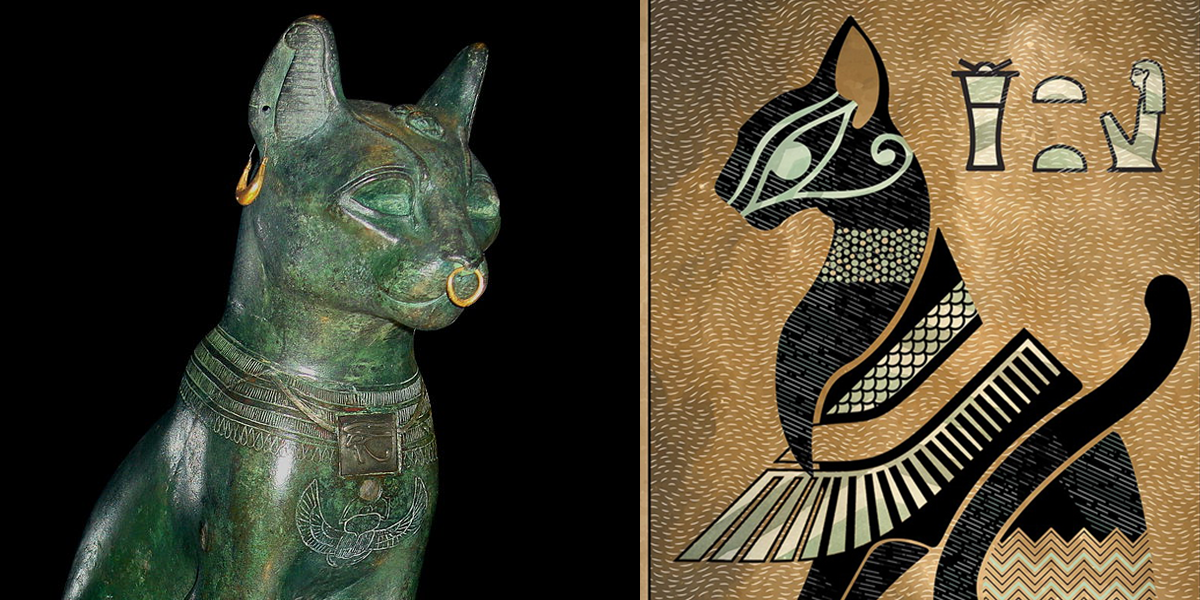
Cats were closely associated with the goddess Bastet, who was represented as a cat or as a woman with a feline head. Cat figures, cat mummies and religious offerings have been found at important Egyptian sites, showing how deeply cats became connected to religious life.
But the idea that ancient Egyptians simply "worshipped cats" needs some explanation. Cats themselves were not gods in the same sense as Bastet. Their sacred status came from the qualities Egyptians associated with them and their relationship with particular deities.
1. Cats Became Closely Connected With Bastet
The strongest connection was with Bastet, a goddess whose major cult centre was Bubastis in the Nile Delta.
Bastet was associated with protection, fertility and prosperity. In earlier periods she could have a lioness form, but later representations increasingly showed her with the head or form of a domestic cat.
The Metropolitan Museum of Art describes Bastet as a powerful protective goddess whose peaceful characteristics were emphasised when she was represented as a cat-headed deity. Her cult spread well beyond Bubastis.
2. Cats Had Qualities Egyptians Valued
Cats were useful animals in Egyptian households and settlements because they could hunt mice and other pests.
The relationship eventually went beyond practical usefulness. Egyptian art from later periods shows cats living alongside people, including scenes in which cats appear beneath chairs or accompany their owners.
The Metropolitan Museum notes that cats were first valued for their mouse-hunting abilities and later became household companions.
Their behaviour also made them suitable symbols for a protective deity. A cat could appear calm and domesticated but become aggressive when threatened. That combination fitted the different sides of Egyptian divine power.
3. Bastet Represented Protection
Protection was one of the most important ideas attached to Bastet.
Egyptian religious art often presents the cat as alert and watchful. Several surviving bronze cat figures show the animal sitting upright with an attentive expression.
The symbolism was deliberate. The cat's alertness could represent a protective force watching over people and their homes.
The British Museum similarly describes cats as being associated with Bastet and notes that Egyptians regarded certain animals as representations of gods and goddesses.
4. Cats Were Also Connected With Fertility and Family Life
Bastet was not only a protective goddess. She was also associated with fertility.
This helped strengthen the connection between cats, domestic life and family. Bastet's gentler feline form represented the benevolent side of divine power, contrasting with the more dangerous lioness imagery associated with other goddesses.
The Metropolitan Museum specifically identifies Bastet with both protection and fertility, while noting that her peaceful qualities were emphasised in her cat-headed form.
5. Egyptians Made Cat Statues as Religious Offerings
The archaeological record provides some of the clearest evidence of the importance of cats in Egyptian religion.
During the Late Period and Ptolemaic Period, roughly 664 to 30 BCE, cat statuettes became among the most common animal-shaped religious dedications.
People could dedicate these figures to temples or deposit them in religious catacombs. Some hollow bronze figures were even designed to contain a mummified cat.
The Metropolitan Museum has several examples from this period and records that cat figures were deposited at sites including Bubastis and Saqqara.
6. Millions of Animal Mummies Were Part of Religious Practice
Cats were not simply buried as ordinary household pets.
Animal mummification became an important part of Egyptian religious practice, particularly during the first millennium BCE. Large numbers of animals associated with particular gods were raised around temple centres and later mummified.
The remains were deposited in dedicated burial areas as religious offerings.
The scale was enormous. The Metropolitan Museum notes that hundreds of thousands of animal mummies have been found in Egyptian catacombs and other locations.
Cat mummies are particularly associated with the cult of Bastet.
7. Bubastis Became a Major Centre of Cat Worship
Bubastis, in the Nile Delta, was the principal cult centre of Bastet.
Archaeological discoveries there include large numbers of cat mummies and cat statuettes, providing physical evidence of the scale of the cult.
Bastet's importance was not limited to Bubastis. Her worship spread across Egypt, and representations of the goddess became especially common during the Late and Ptolemaic periods.
8. Cats Were Sacred, But Not Every Cat Was Considered a God
This is one of the most important distinctions.
Ancient Egyptians did not necessarily believe that every ordinary cat walking through a home was literally the goddess Bastet.
Instead, cats were sacred because of their association with divine powers and because particular animals could be regarded as manifestations or representatives of gods.
The evidence from animal cult sites shows a more complex religious system in which animals could be connected with specific deities and used in religious rituals.
9. The Cat's Image Became a Powerful Religious Symbol
The connection eventually produced an enormous variety of cat imagery.
Egyptian artists produced bronze, faience and other representations of cats, sometimes decorating them with collars and protective amulets.
Some surviving figures are remarkably detailed. One Metropolitan Museum cat has pierced ears that originally held earrings, while other examples carry protective symbols.
These objects show that the cat was not merely an ordinary animal in Egyptian religious art. It had become a powerful symbol with specific religious meaning.
10. The Cat's Importance Lasted for Centuries
The Egyptian relationship with cats was not a brief religious fashion.
Objects associated with Bastet and sacred cats survive particularly strongly from the Late Period and Ptolemaic Period, but the connection between cats, households and Egyptian religious ideas developed over a much longer period.
By the later periods of ancient Egyptian history, Bastet's feline identity was firmly established and cat-related religious objects were being produced on a large scale.
That is why museums today hold thousands of Egyptian objects depicting cats, Bastet and other feline forms.
Why Did Egyptians Worship Cats?
The answer was not simply that Egyptians thought cats were cute or believed every cat was a god.
Cats became important because they occupied a special place in Egyptian life and gradually acquired powerful religious associations. They were useful hunters, familiar household animals and symbols of qualities such as alertness, protection and fertility.
Bastet gave those associations a divine identity. Over time, temples, statuettes, offerings and cat mummies turned the connection into one of the most recognisable features of ancient Egyptian religion.
The result is the enduring image of ancient Egypt and the cat — a relationship supported not just by stories, but by thousands of surviving archaeological objects.